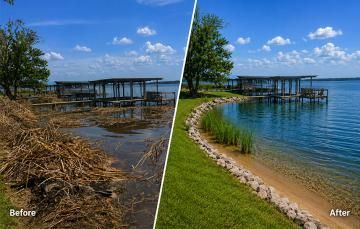
Lakefront living in Lake County If you live on the water in Lake County, you already know there is nothing quite like it. A quiet morning on the lake. A cup of coffee on the porch. The sun coming up over the water in Tavares, Leesburg, Mount Dora, Eustis, Clermont, or one of the smaller lake communities tucked all around Central Florida. That view is a big part of why people love living here. Then one day you look out and realize the shoreline has gotten away from you. The cattails are thicker than they used to be. The weeds are creeping farther into the water. Maybe you cannot see the edge of the lake like you used to. Maybe the area around your dock looks rough. Maybe you have been thinking about cleaning it up, adding some nicer plants, or even creating a small beach area where your family can actually enjoy the waterfront again. That is usually where most homeowners start. They are not trying to become lake management experts. They just want their lakefront back. We understand that feeling because that is how Professional Waterfront Cleanup started. Clay Bell had the same problem on his own lakefront. The weeds and invasive growth were keeping his family from enjoying the water. He tried pulling them by hand. He tried different approaches. Eventually, he found a better way to clear and maintain the shoreline, and the neighbors started noticing. That experience turned into Professional Waterfront Cleanup, and since 2007 we have helped homeowners, businesses, HOAs, and local properties all across Central Florida clear, restore, and maintain their waterfronts. If you are just starting to research what to do with an overgrown lakefront in Lake County, here are a few things worth knowing before you start cutting, pulling, spraying, or hauling anything away. A lot of homeowners look at the shoreline and think of it like landscaping. That makes sense. You see tall weeds, overgrowth, brush, and messy plants, so your first thought is probably to clean it up the same way you would clean up a flower bed or overgrown fence line. But the edge of a lake is different. Aquatic plants are part of the lake system. Some are useful. Some are invasive. Some help hold the shoreline in place. Some provide habitat for fish and wildlife. Some can take over fast and block access, trap debris, collect muck, and make the property harder to enjoy. That is why the first question should not be, “How do I get rid of all of this?” A better first question is, “What should stay, what should go, and what is the right way to manage it?” That is especially true here in Lake County, where so many homes sit on lakes, canals, ponds, and connected waterways. What happens along one shoreline can affect more than one property. A few cattails along a shoreline may not be a problem. They can be part of a healthy lake edge. But when cattails spread too thick, they can block your lake view, limit access to the water, take over shallow areas, and make the shoreline feel unusable. A homeowner in Mount Dora may want a cleaner view. A family in Leesburg may want to open the area near a dock. Someone in Tavares may want to turn an overgrown edge into a cleaner, more attractive lakefront with better access and a few nicer plants. Those are all reasonable goals. The key is knowing how to get there without damaging the shoreline or running into trouble with the wrong kind of removal. This is one of the biggest things homeowners do not always realize at first. Florida has rules for managing aquatic plants. In many cases, a waterfront property owner needs to check with the Florida Fish and Wildlife Conservation Commission before removing or altering aquatic plants in waters of the state. There are some exemptions, but you do not want to guess. That does not mean every small cleanup is complicated. It just means you should ask the right questions before the work begins. Those questions matter. If you are in Tavares, Leesburg, Mount Dora, Eustis, Clermont, Lady Lake, Fruitland Park, or anywhere else in Lake County, your property may also fall under local rules depending on where the work is happening and what type of shoreline you have. That is one reason we always recommend getting the area looked at before you start guessing. A clean lakefront does not have to mean a lifeless lakefront. In fact, the best looking shorelines usually have a plan. They may have open water access, a clear view, a maintained edge, controlled vegetation, and the right plants in the right places. That can look different from property to property. Some homeowners want to open a view corridor so they can actually see the lake again. Some want weeds and debris removed around a dock or boat slip. Some want cattails, muck, or nuisance plants cleared back so the shoreline is usable. Some want to improve the appearance with better shoreline plants. Some want to create a more natural but maintained look. Some want a beach area or sandy section where the family can enjoy the water. The right approach depends on the property, the plants, the water level, access for equipment, the shoreline condition, and what is allowed. That is why a one size fits all answer rarely works with lakefront cleanup. Our guide to lake and pond weed removal methods explains the options to discuss during an assessment. One property may need hand work and hauling. Another may need aquatic herbicide treatment from a licensed applicator. Another may need mechanical removal. Another may need a maintenance plan so the same problem does not come right back. A lot of people call when the shoreline has already become a mess, but usually it did not happen overnight. One season the cattails get a little thicker. Then the weeds spread. Then the water edge gets harder to reach. Then debris starts collecting. Then the view disappears. By the time it really bothers you, the problem has already had time to root in and spread. That is why ongoing maintenance can be so important. Once a shoreline has been cleared and shaped back up, it is usually easier to keep it under control than to wait until it takes over again. Think of it like mowing a yard. If you keep up with it, it stays manageable. If you leave it alone too long in a Florida summer, it becomes a whole different job. Your lakefront works the same way. Start by figuring out what kind of problem you actually have. Then think about what you want the property to feel like when it is finished. Those answers help guide the plan. The best cleanup is not just about removing plants. It is about helping the property work better for the people who live there. That is really what most Lake County homeowners are after. They want to sit outside and see the water. They want the family to be able to walk down to the lake without stepping through a mess. They want the dock area to look taken care of. They want the property to feel open, clean, and welcoming again. And honestly, that is a good goal. Living on the water is special. It should feel like something you get to enjoy, not something you are constantly fighting. Just do it the right way. Before you start cutting cattails, pulling plants, adding sand, spraying weeds, or hiring someone with equipment, take the time to understand what is growing there and what rules may apply. A little planning up front can save a lot of frustration later. At Professional Waterfront Cleanup, we have seen just about every kind of lakefront problem Central Florida can throw at a property owner. Overgrown shorelines. Weedy canals. Muck filled edges. Dock areas you can barely reach. Beautiful lakefronts that just needed the right cleanup and maintenance plan to come back to life. We are based right here in Leesburg and serve homeowners throughout Lake County and Central Florida. We are licensed and insured for aquatic herbicide weed control, and we work with the appropriate agencies on aquatic spray projects. Maybe you are ready to clean up your shoreline now. Maybe you are still in the early research stage and just trying to understand what is possible. Either way, that is okay. Our advice is simple. Learn what you can. Do not assume every plant should go. Do not assume every method is allowed. And do not wait so long that a manageable shoreline turns into a major project. If you want help looking at your lakefront and figuring out the right next step, explore our residential lakefront cleanup and maintenance services, then tell us about your property. Helpful official resources for homeowners: FWC Aquatic Plants Licenses and Permits UF IFAS Permitting Guidance for Plant Management in Florida WatersLakefront cleanup is not the same as regular yard work
Cattails are a good example
In Florida, aquatic plant work may require approval
The goal is not always to strip the shoreline bare
Most lakefront problems build up slowly
If you are just starting your research, look at the problem and the goal
You are really trying to enjoy the place you already love
Professional Waterfront Cleanup is here when you are ready