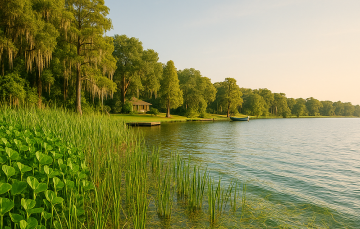
Removing weeds from a lake or pond starts with understanding what is growing, where it is growing and what you want to improve. A shoreline used for boating may need a different approach from a stormwater pond or a small lakefront beach. There is no single removal method that fits every property.
Professional Waterfront Cleanup helps Central Florida homeowners, HOAs, businesses and municipalities assess aquatic vegetation and plan cleanup. This guide explains the decisions to discuss before work begins.
Identify the plants and the problem first
Describe the growth you can see and the area it affects. Is it blocking access to a dock, spreading along the shoreline or collecting in a pond? Share the property location and photos when discussing the project. Plant identification matters: unwanted growth, native shoreline plants, algae and debris should not automatically be treated as the same problem.
Also consider access. The slope of the shoreline, nearby structures and the route available for equipment can affect how the work is approached. An assessment helps establish what is practical for the site.
Compare lake and pond weed removal options
Manual removal
Hand removal and other physical cleanup can address vegetation in areas that crews can reach. The work involved depends on the plant, the affected area and site conditions. Ask how removed material will be handled and what follow-up may be needed. Removing visible growth does not mean it can never return.
Mechanical removal
Equipment can help remove vegetation, debris or accumulated material where access and the project scope allow. The right equipment depends on the shoreline and the work required. Our Lake Dora waterfront cleanup example shows why equipment selection is part of planning a real project.
Licensed aquatic herbicide application
Aquatic herbicide application is one of the services PWC offers. Whether treatment is appropriate depends on the target vegetation, the site and the requirements for the work. Discuss the options with a licensed aquatic applicator rather than choosing a treatment from a generic online recommendation. Ask about the intended treatment area, any use restrictions and follow-up care for your specific project.
These approaches are not interchangeable, and a plan may involve more than one type of work. The recommendation should follow an assessment, rather than a blanket claim that one method is always best or that a treatment is suitable for every waterfront.
Check requirements before clearing a shoreline
Before removing aquatic vegetation, changing a beach area or adding sand, establish what requirements apply to the property and who is responsible for the necessary checks. Do not assume a project is exempt because similar work has been done nearby.
Our Lake County lakefront planning guide includes useful questions and links to official resources. Requirements are site-specific, so use the guide as a starting point for discussion.
Plan for follow-up and regrowth
Talk about what to watch for after cleanup and when the site should be reassessed. A one-time project and a recurring maintenance plan serve different needs. PWC offers maintenance plans upon request; the scope should reflect the property and the conditions being managed.
Get help with your Central Florida waterfront
Clay Bell started Professional Waterfront Cleanup in 2007 after working to improve his own family's lakefront. Today the family-owned business serves residential, commercial and municipal waterfronts across Central Florida.
Explore professional residential lakefront weed removal, commercial pond maintenance or municipal pond and canal cleanup to find the service that fits your property.
For a free estimate, tell us where the property is, what needs attention and how the area can be accessed. Request a waterfront cleanup estimate or call (352) 504-0433.